The World’s Most Important Oil Route Is Back in Crisis—Here’s Why It Matters
By Staff Reporter
Updated: July 17, 2026
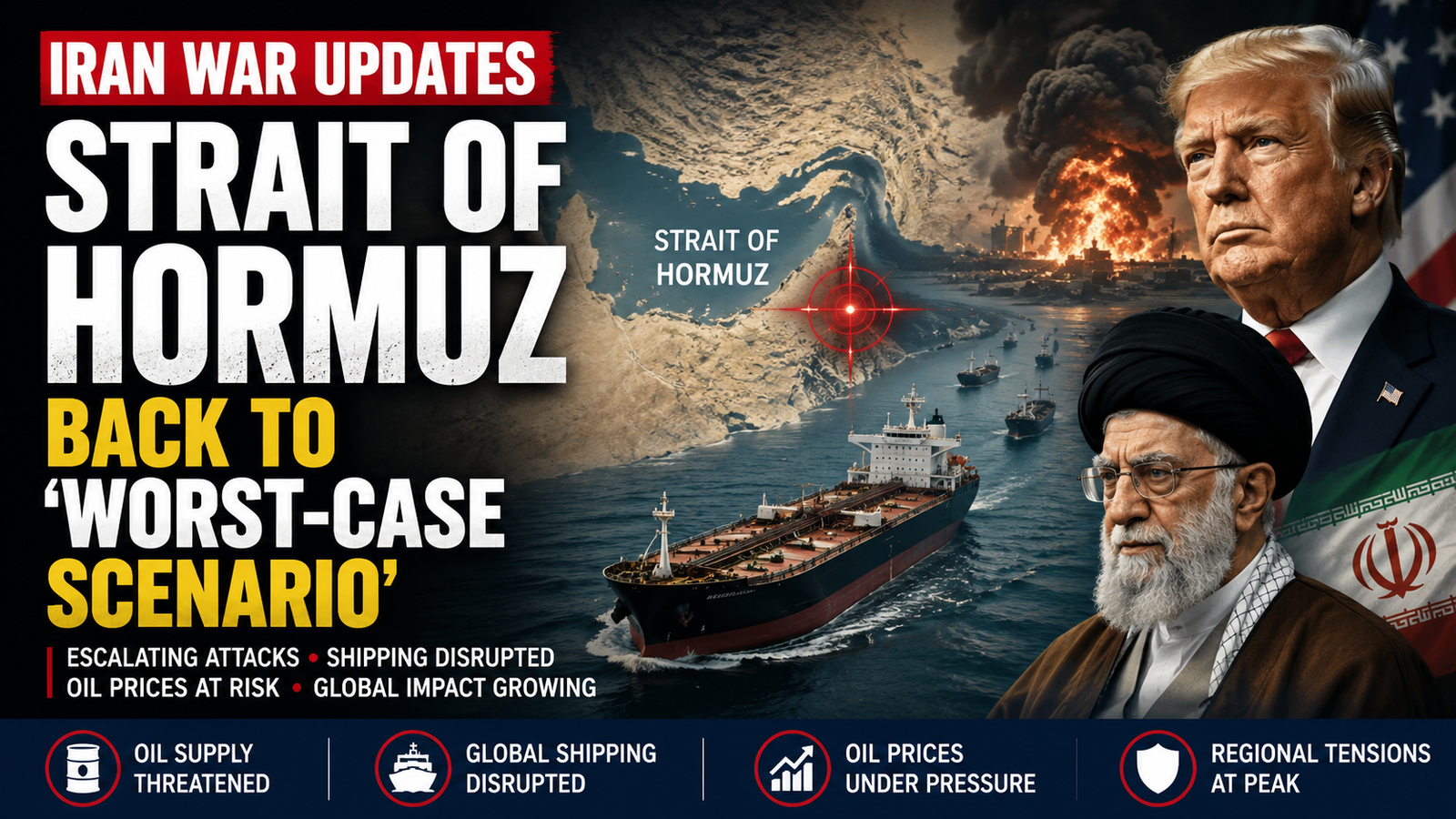
The strategic Strait of Hormuz, one of the world’s most critical energy shipping routes, has once again become the center of a rapidly escalating conflict as renewed military exchanges between the United States and Iran threaten global oil supplies and regional security.
Security analysts warn that the situation has deteriorated to a “worst-case scenario,” with commercial shipping grinding to a near standstill amid fears of further attacks. The latest escalation follows the collapse of a fragile ceasefire, triggering fresh military operations, retaliatory strikes, and growing uncertainty across the Persian Gulf.
Commercial Shipping Faces Severe Disruption
Maritime risk experts say vessel operators are increasingly unwilling to navigate the Strait of Hormuz due to heightened security threats.
The narrow waterway, through which nearly one-fifth of the world’s oil supply normally passes, has witnessed a dramatic decline in tanker movements. Shipping data indicates that several cargo vessels have either delayed their journeys, reversed course, or remained anchored outside the Gulf while awaiting security improvements.
Industry analysts describe the current environment as one of the most dangerous periods for commercial navigation in recent years, warning that prolonged disruption could significantly impact global energy markets.
Iran Claims New Wave of Attacks
Iran’s Islamic Revolutionary Guard Corps (IRGC) announced that it launched coordinated strikes targeting multiple U.S. military facilities across the Middle East, including locations in Syria, Kuwait, Bahrain, Jordan and Oman.
Iranian officials claimed the attacks damaged military infrastructure and logistical facilities. However, U.S. authorities have not confirmed the extent of the alleged damage, noting that Iranian military statements have frequently exaggerated battlefield outcomes.
Separately, officials in Kuwait acknowledged that Iranian strikes affected certain power and water facilities, while Qatar reported that debris from intercepted projectiles injured a child.
U.S. Continues Military Campaign
The United States confirmed that its forces carried out another consecutive night of airstrikes targeting Iranian military assets.
According to U.S. military officials, the strikes focused on facilities linked to Iran’s military capabilities following continued attacks on commercial shipping and regional partners.
The White House reiterated that Washington would continue responding to threats against international maritime traffic and allied nations operating in the Gulf.
Oil Markets React to Rising Risk
The renewed violence has intensified concerns across global energy markets.
Oil traders are closely monitoring developments as disruptions in the Strait of Hormuz could significantly affect crude exports from major Gulf producers, including Saudi Arabia, Iraq, Kuwait, the United Arab Emirates and Qatar.
Several analysts warn that if shipping remains restricted or additional infrastructure comes under attack, oil prices could experience further volatility while supply chains face increasing pressure.
Ceasefire Collapse Deepens Crisis
The latest fighting comes after a short-lived diplomatic agreement between Washington and Tehran unraveled.
The memorandum had sought to reduce military tensions, restore commercial navigation through the Strait of Hormuz, and revive negotiations over Iran’s nuclear program. However, renewed attacks on shipping and subsequent military responses have effectively ended the agreement, returning both sides to open confrontation.
Diplomatic efforts aimed at preventing wider regional conflict have largely stalled, while military activity continues across several fronts.
Why the Strait of Hormuz Matters
The Strait of Hormuz remains one of the world’s most strategically important maritime corridors, connecting the Persian Gulf to the Gulf of Oman and the Arabian Sea.
A significant share of global crude oil and liquefied natural gas exports passes through the narrow channel every day. Any sustained disruption has the potential to affect fuel prices, inflation, shipping costs and global economic stability far beyond the Middle East.
With commercial traffic declining sharply and military operations continuing, analysts warn that the region has entered one of its most volatile periods since the conflict began, leaving governments and energy markets closely watching for signs of either further escalation or renewed diplomatic engagement.